Pictures
A few bee-related pictures that we like!
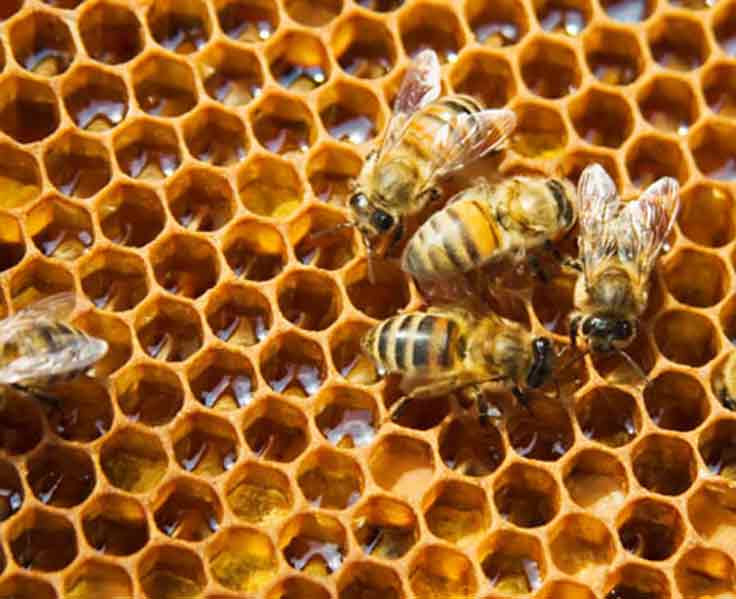
Bees on Honeycomb
Worker bees filling their comb with stores of nectar and pollen.
Nectar is the dietary carbohydrate for the bees and pollen is their protein source.
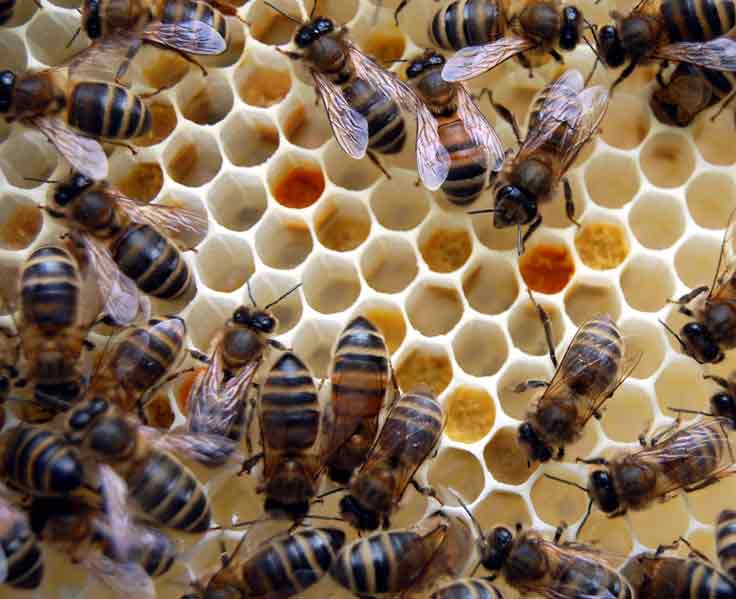
Brand new beeswax
When the wax for the combs is first made by the bees, it is a beautiful cream white colour. As the wax ages and the bees add propolis to strengthen the comb, it will go from cream to yellow to brown and almost black.
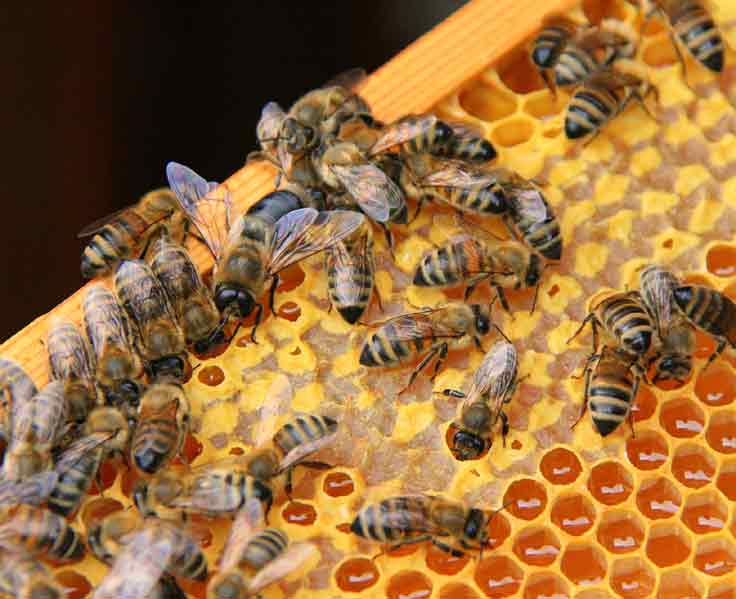
Making Honey
The worker bees evaporate water from the nectar they collect until it is only about 17% water. That's when it can be called honey. They then put a thin cap of wax over the cell to keep the honey in perfect condition until it is needed.
Can you spot the male bee on the comb, known as a Drone?
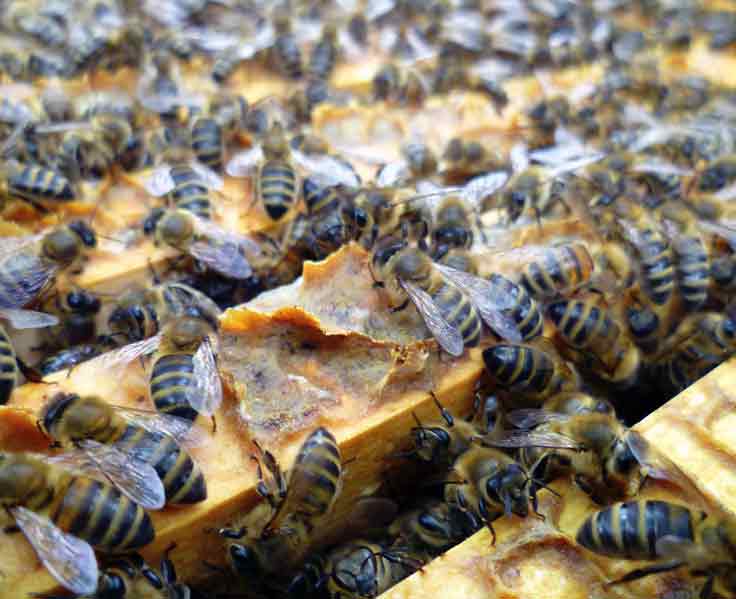
Loads of bees
At the height of summer the Honey Bee colony's population has reached its peak size. This can make it challenging to spot the Queen in amongst them all.
However, it is what every Beekeeper wants to see; more bees equals a healthy colony and the prospect of a good harvest.
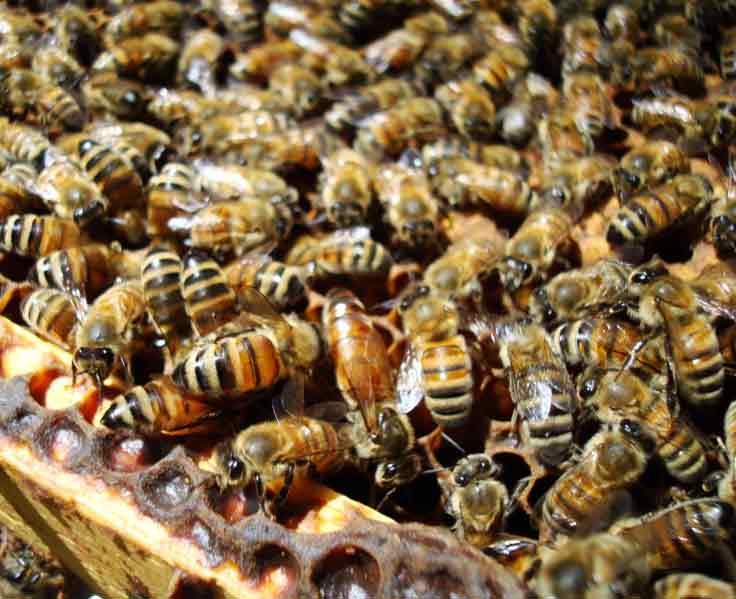
Can you spot the Queen?
In a Honey Bee colony there is one fertile female, known as the Queen. She is entirely dependent upon her daughters for all things; food and warmth. She has an abdomen that is longer than those of a Worker Bee. For many Beekeeping tasks it is important to be able to find the Queen, which is often far easier said than done!
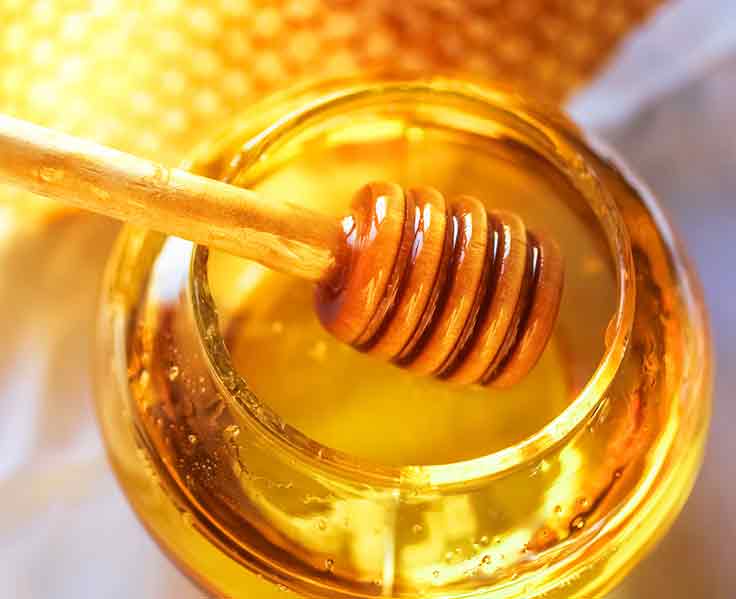
Honey: Liquid Sunshine
This is what we all like about Honey Bees, the fruit of their labours - glorious Honey.